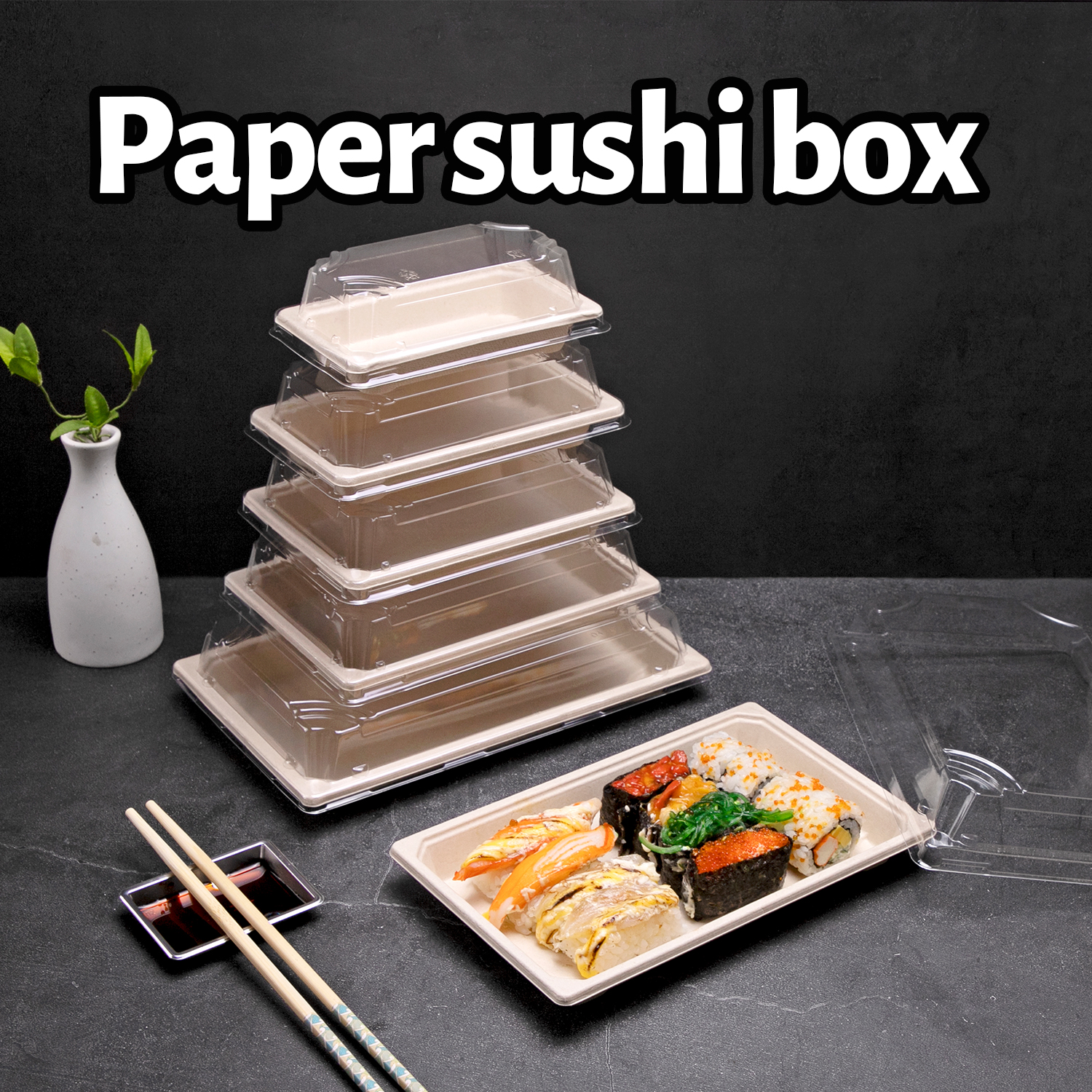
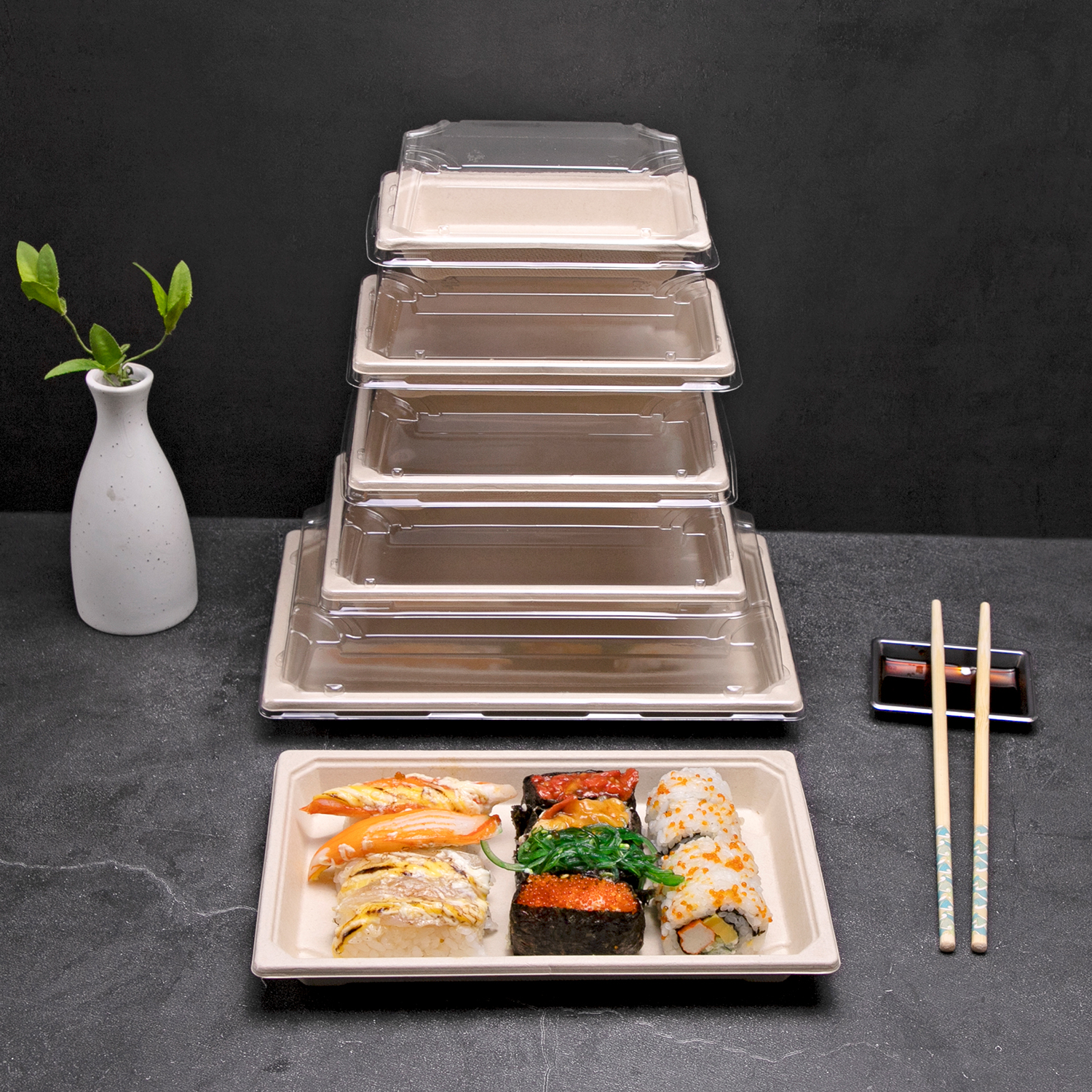
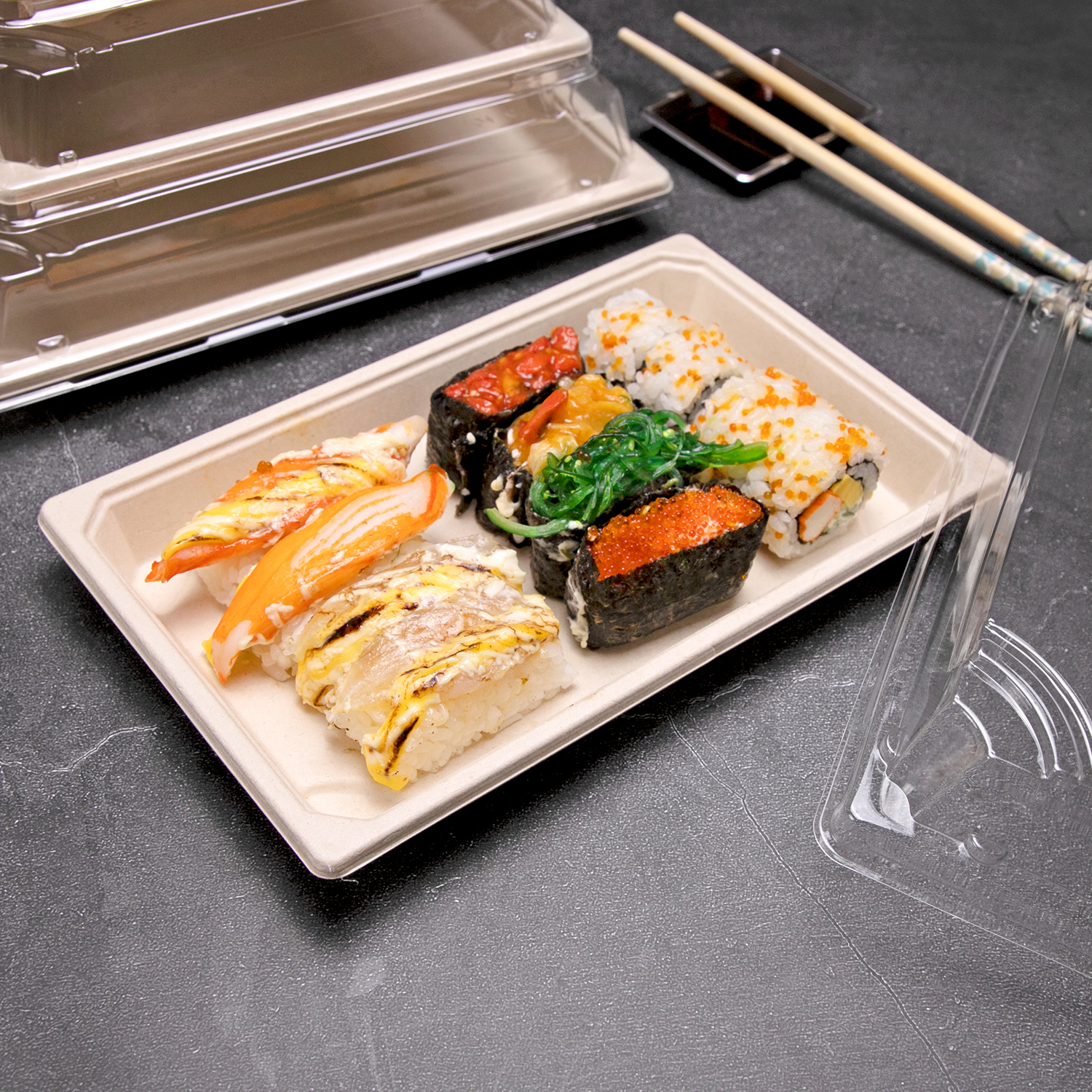
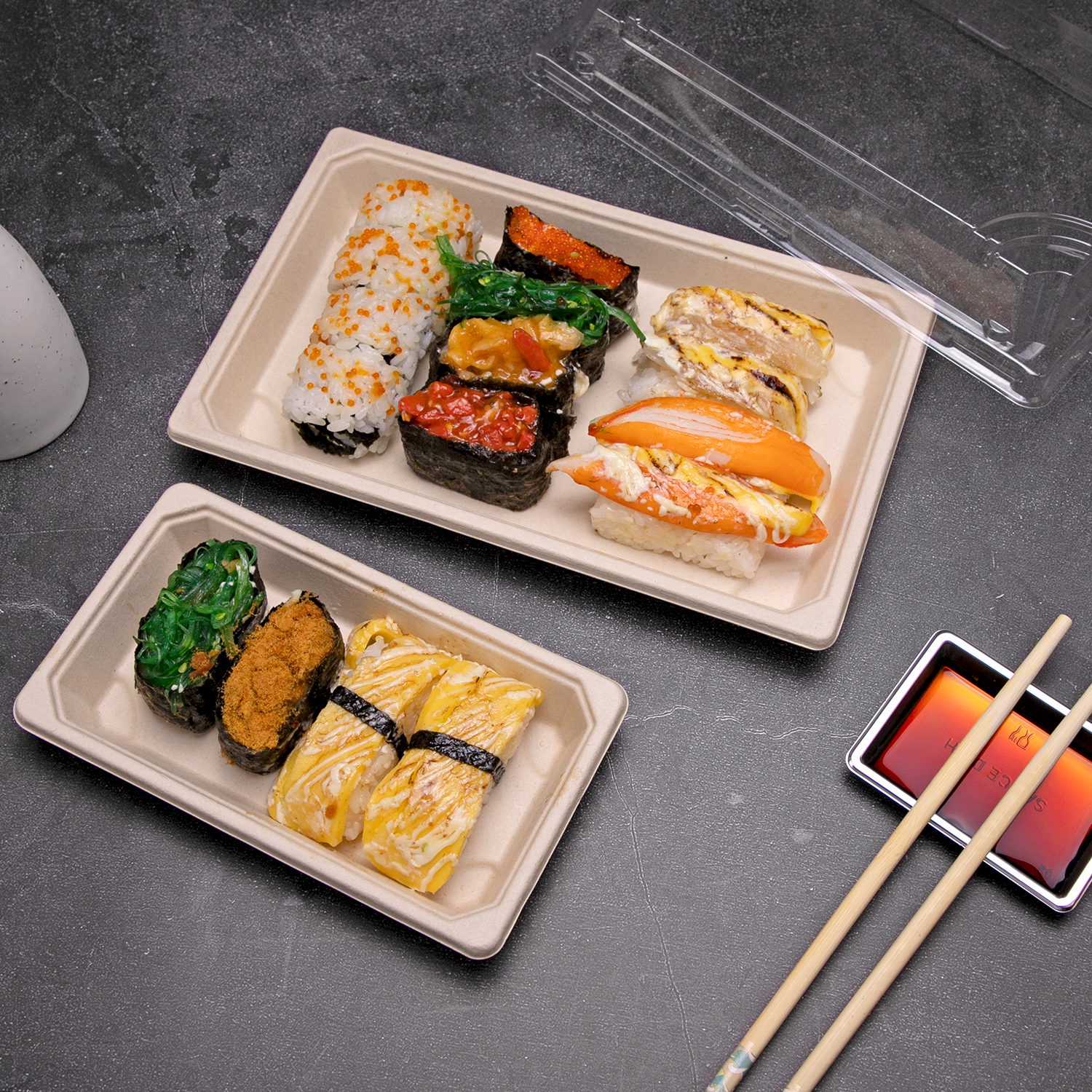
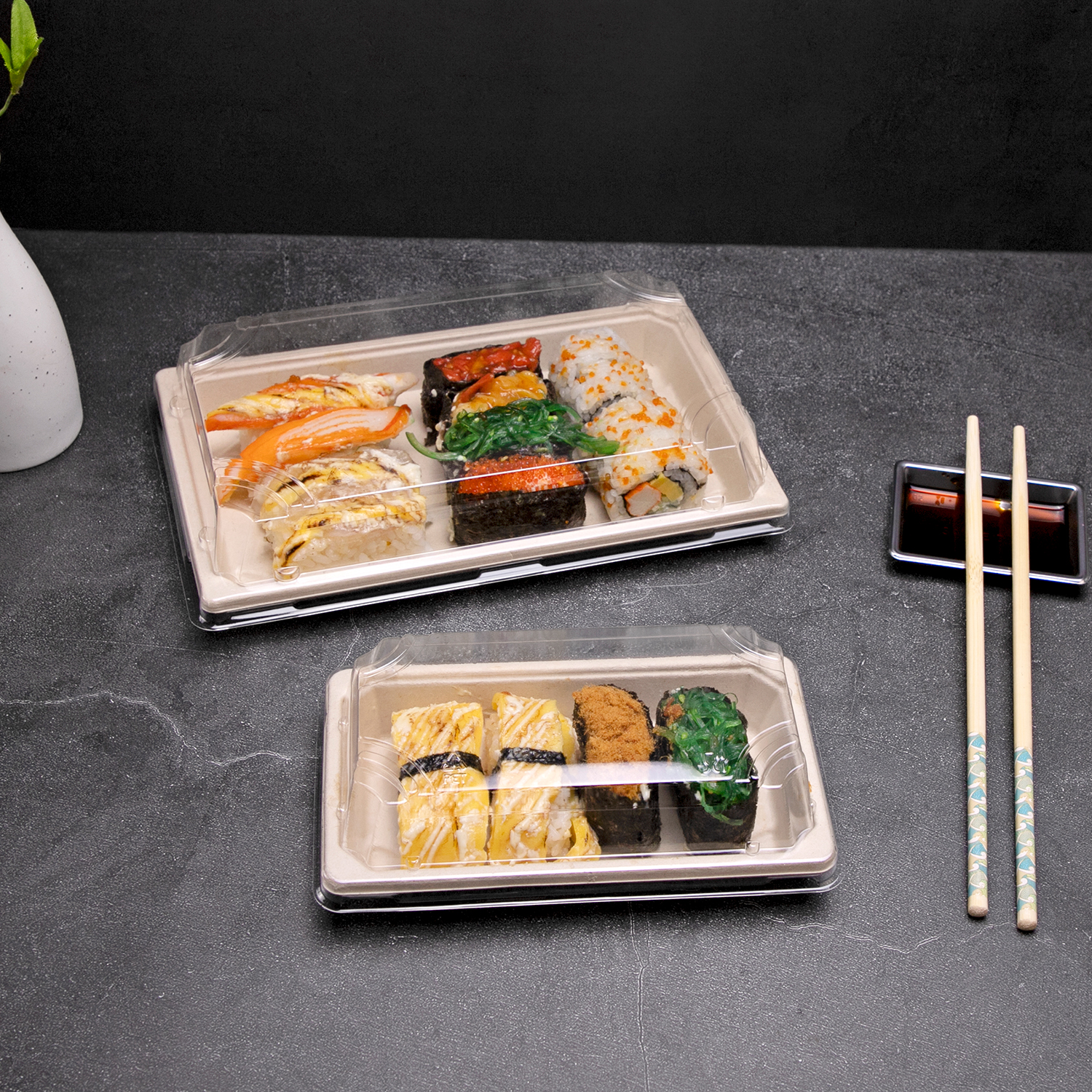
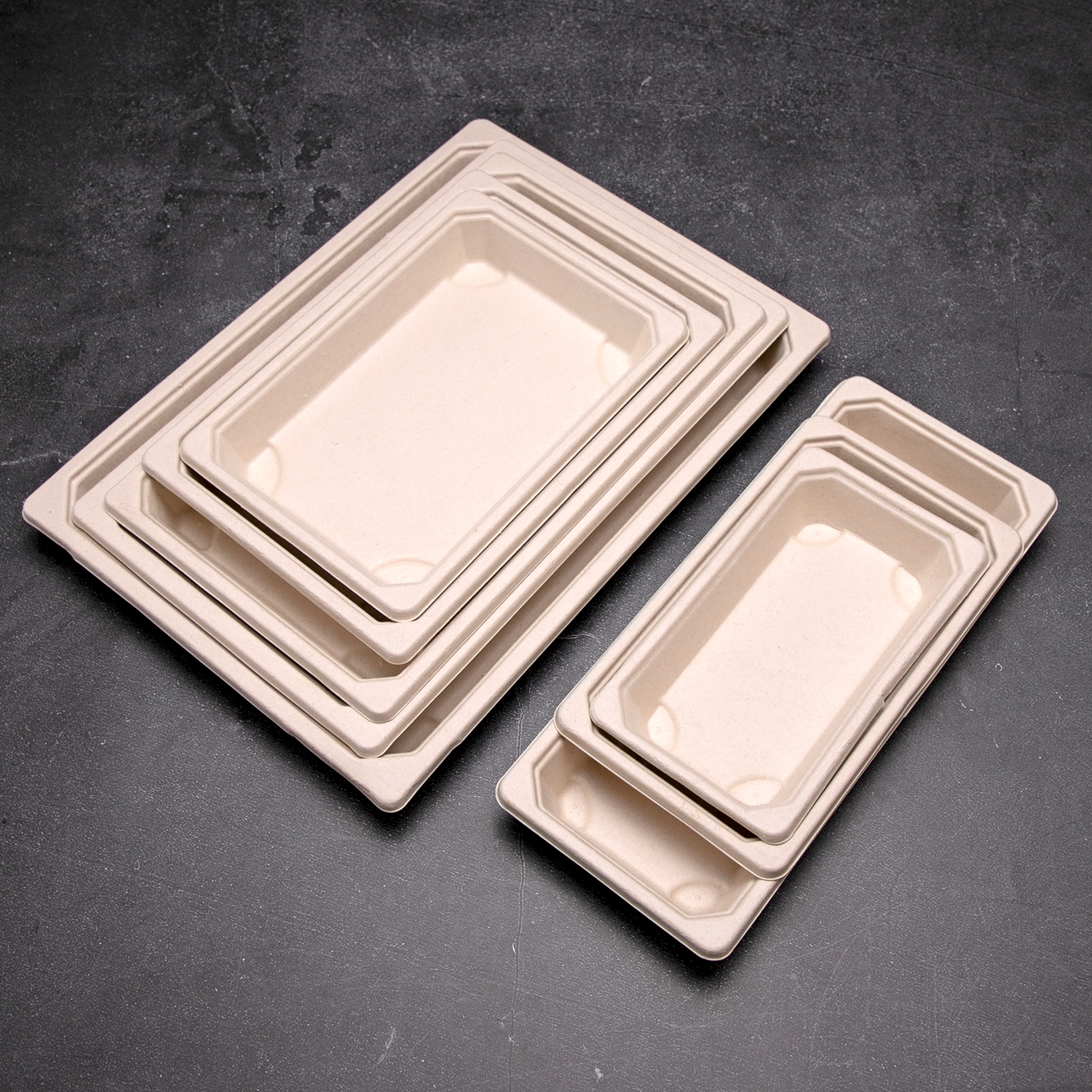
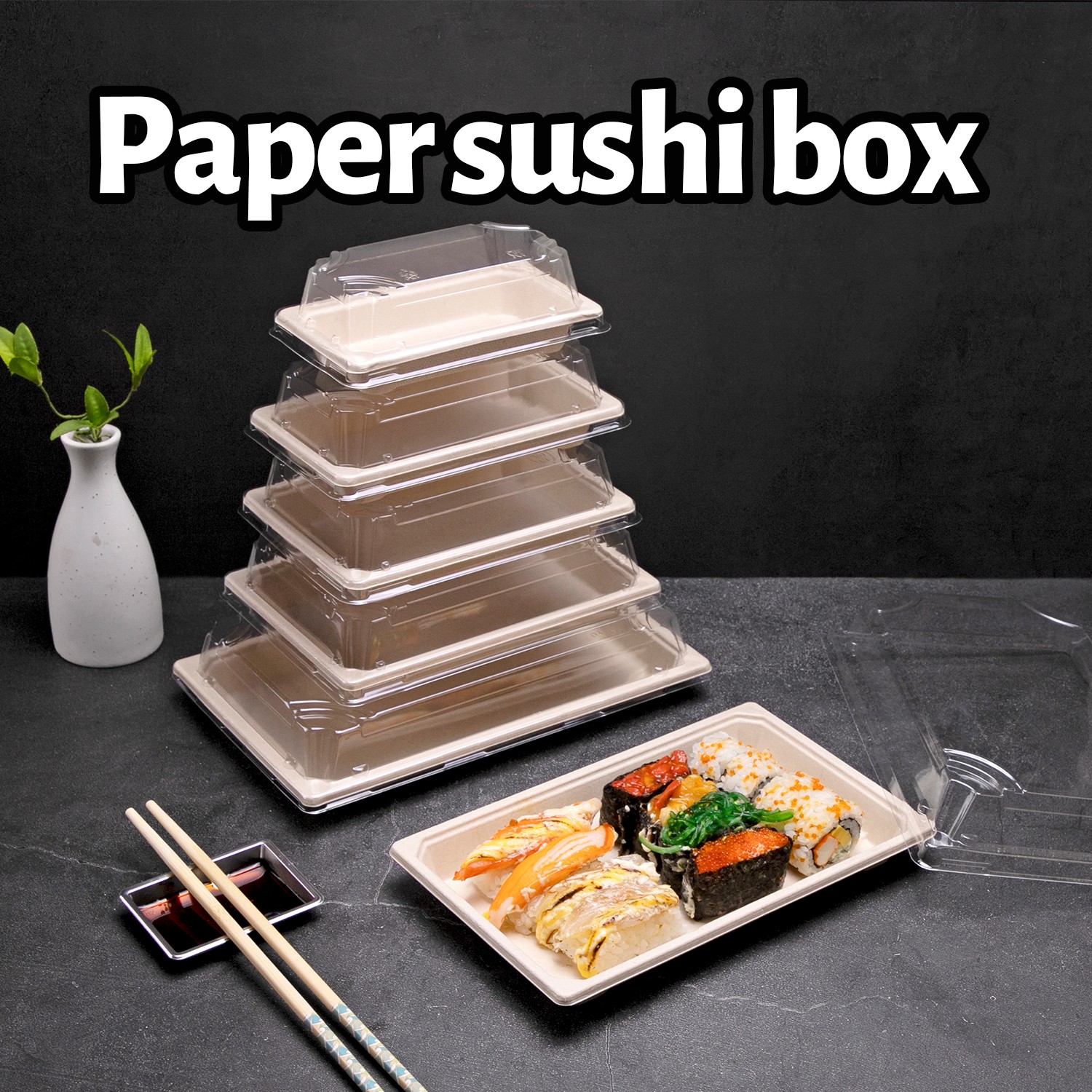
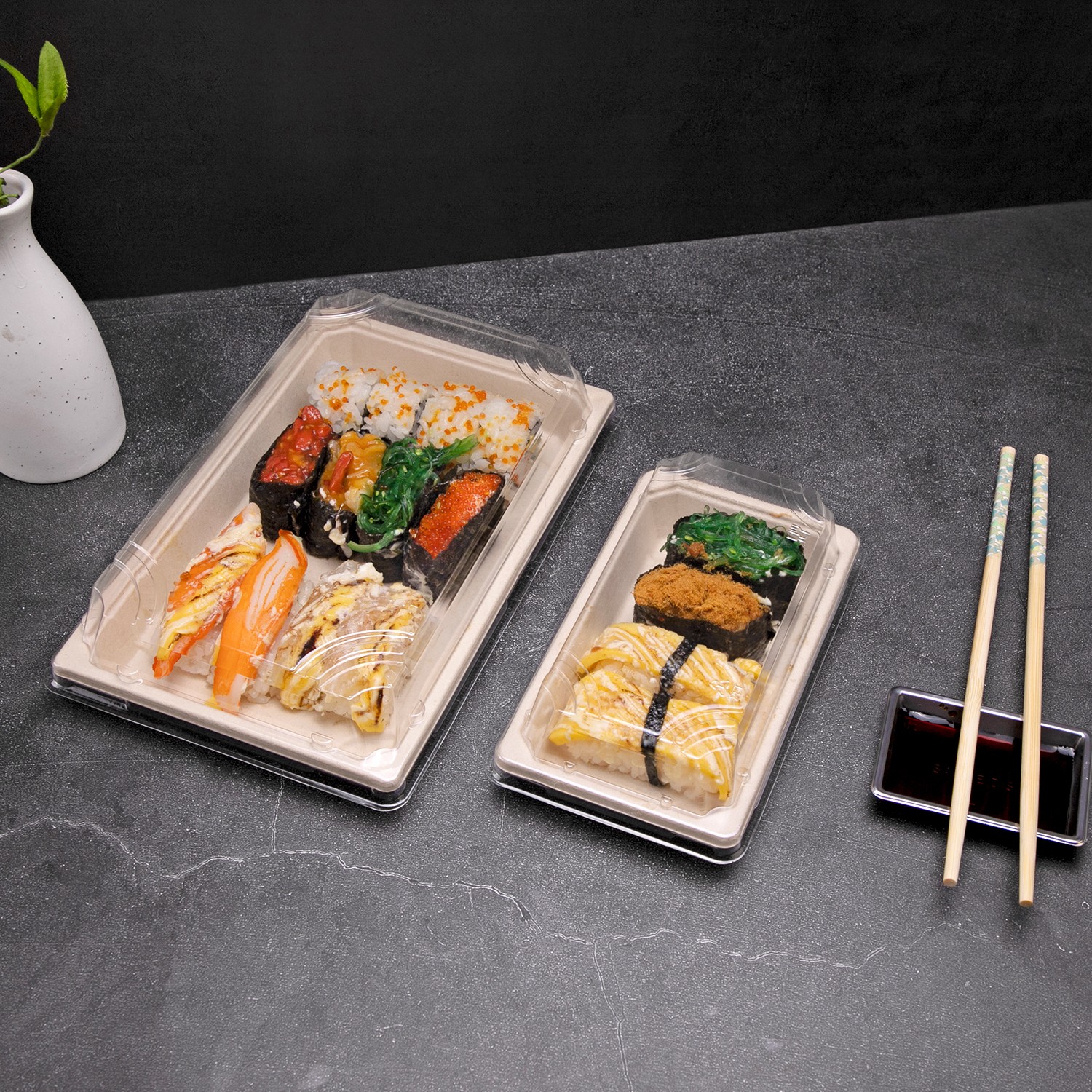
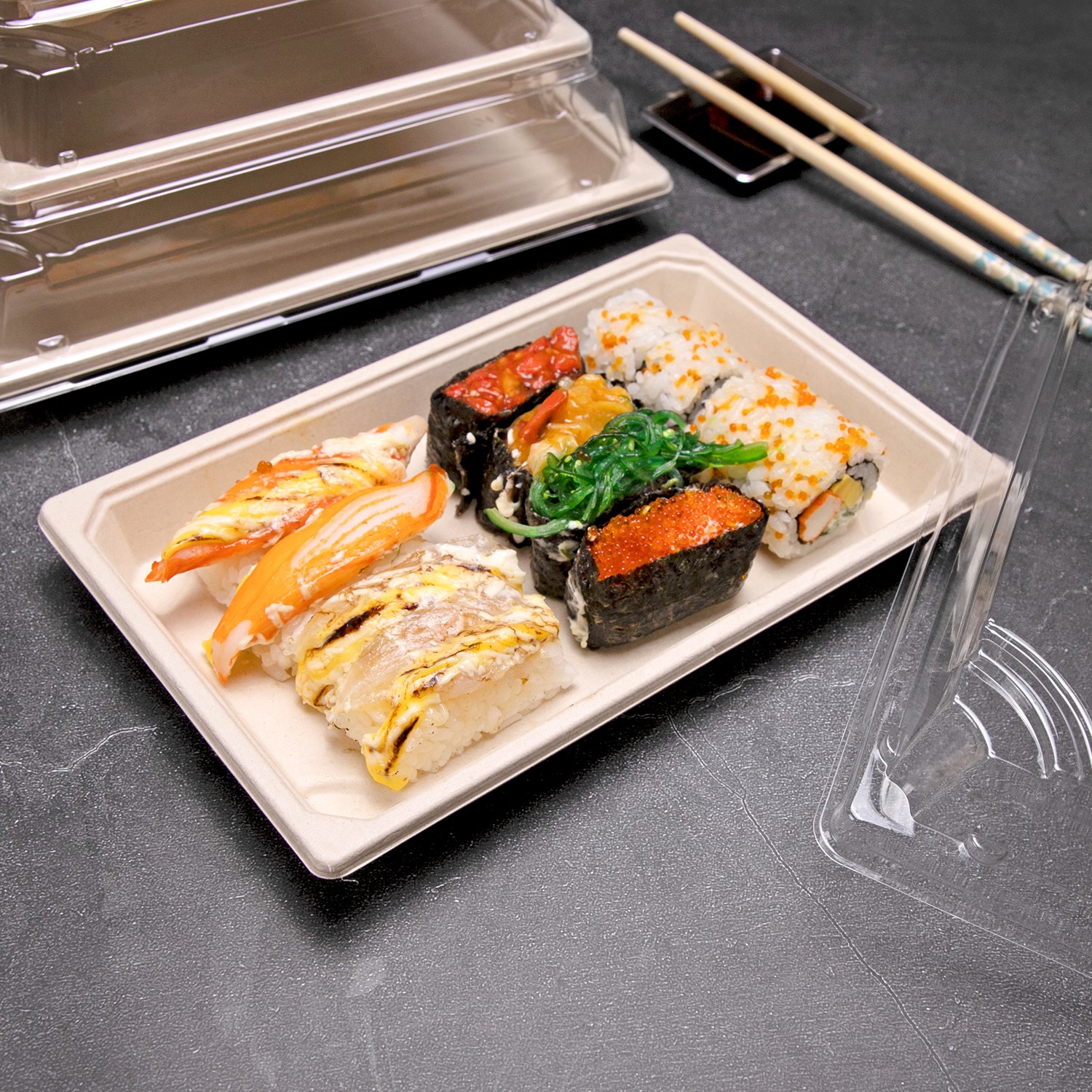
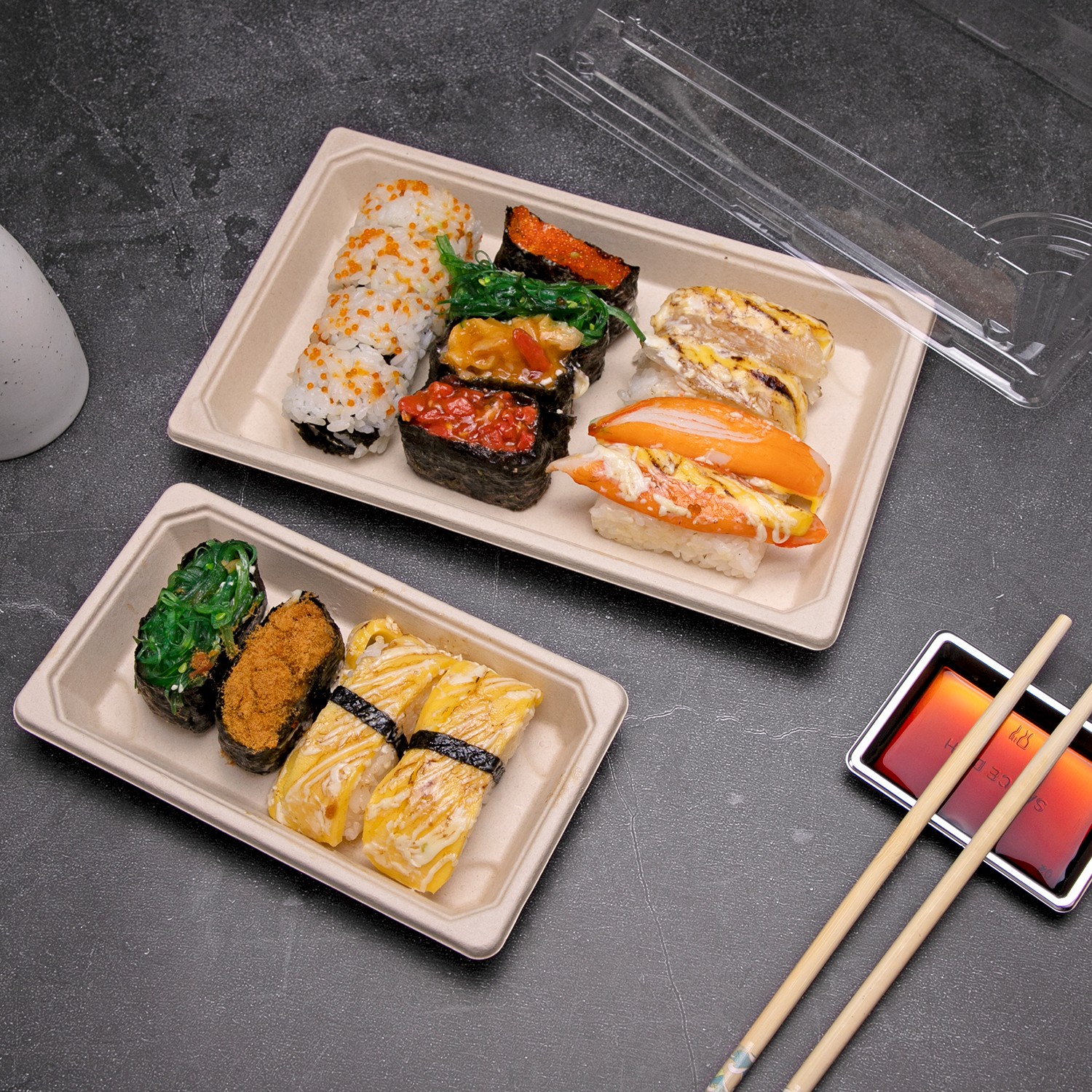
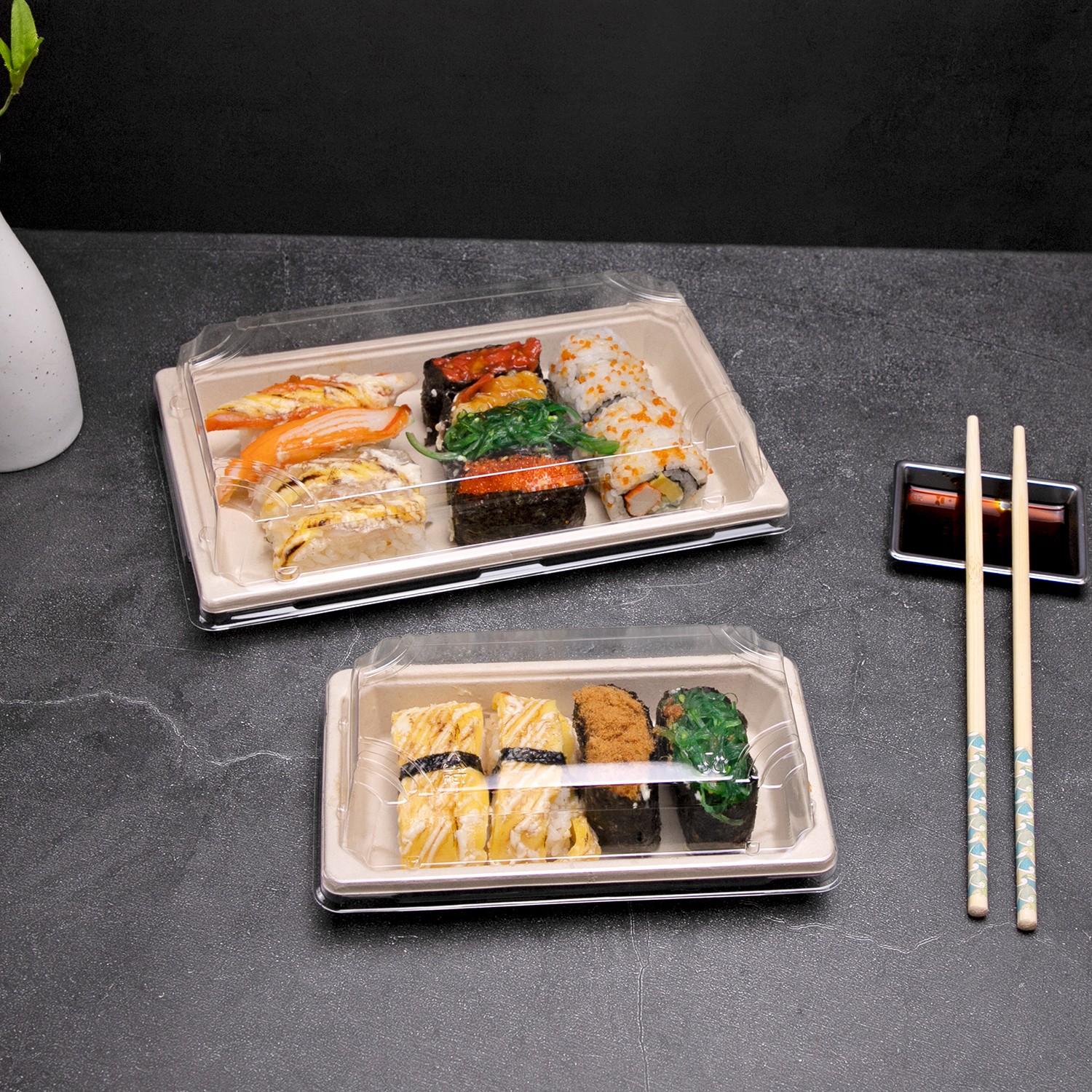
This sugarcane pulp sushi packaging container is a kind of green packaging product especially designed for luxurious meals. For example, sushi. Below is a detailed introduction of this packaging from the perspectives of material, design, performance, and usage.
1. Core material: sugarcane pulp (biodegradable by nature)
Sugarcane pulp plant fiber is the main material of the lunch box body. It is one of the biomass materials that can be biodegradable:
Natural source: By using sugarcane bagasse (sugar production waste) as raw material, it is crushed, pulped, and reshaped, after which the final product is able to "convert waste to treasure" and, at the same time, reduce the dependence on wood.
Eco-friendly and biodegradable: It can biodegrade into carbon dioxide and water completely without leaving any pollution in 2-6 months in the soil, compost, and other natural environments with the help of this box, the traditional plastic sushi box can be replaced, and the environmental burden can be reduced significantly.
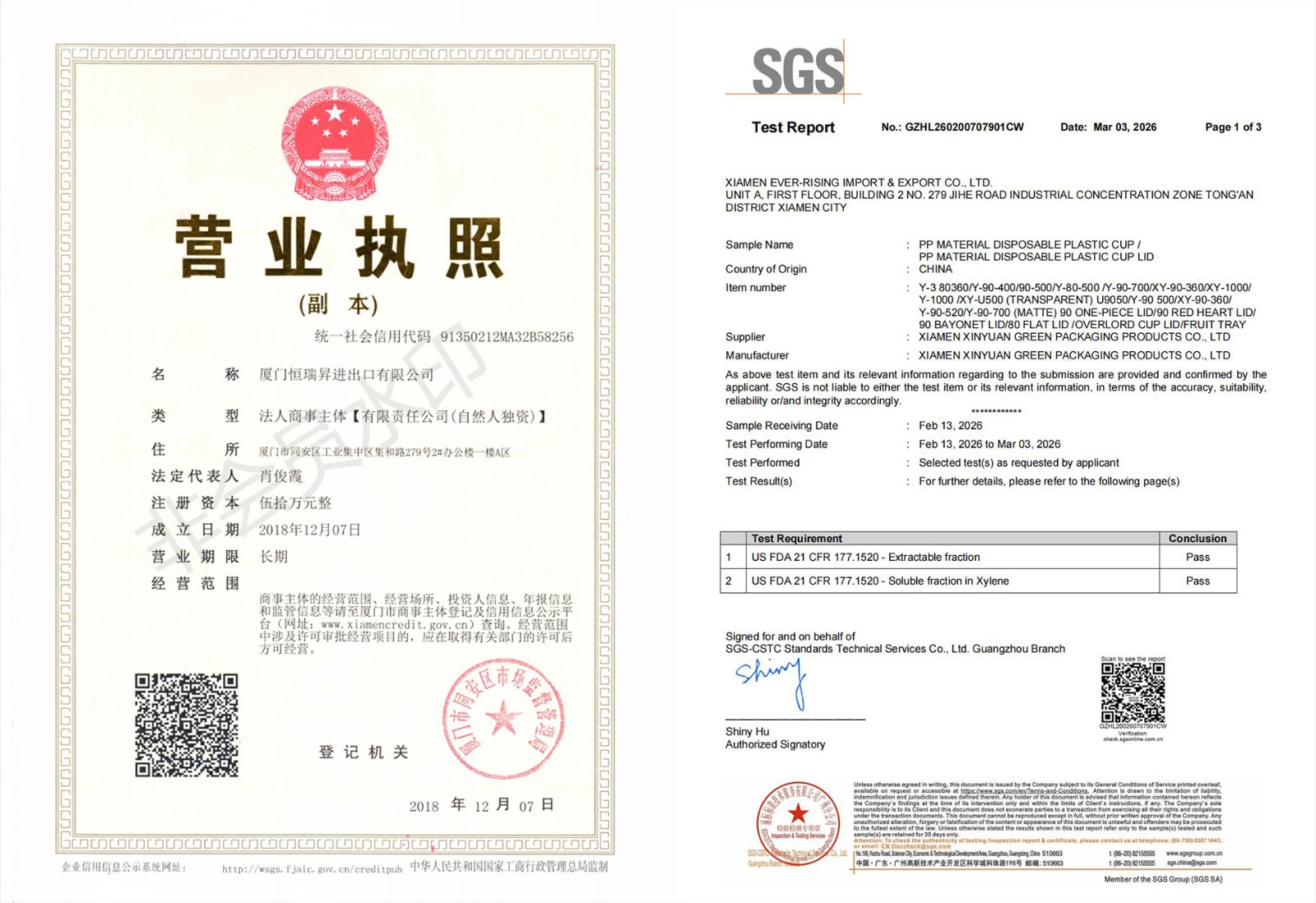
Safe and non-toxic: The raw materials are natural, and there are no harmful chemical additives in the production process. It meets the food contact level standards and can be directly served as raw or cold food (such as sushi and sashimi).
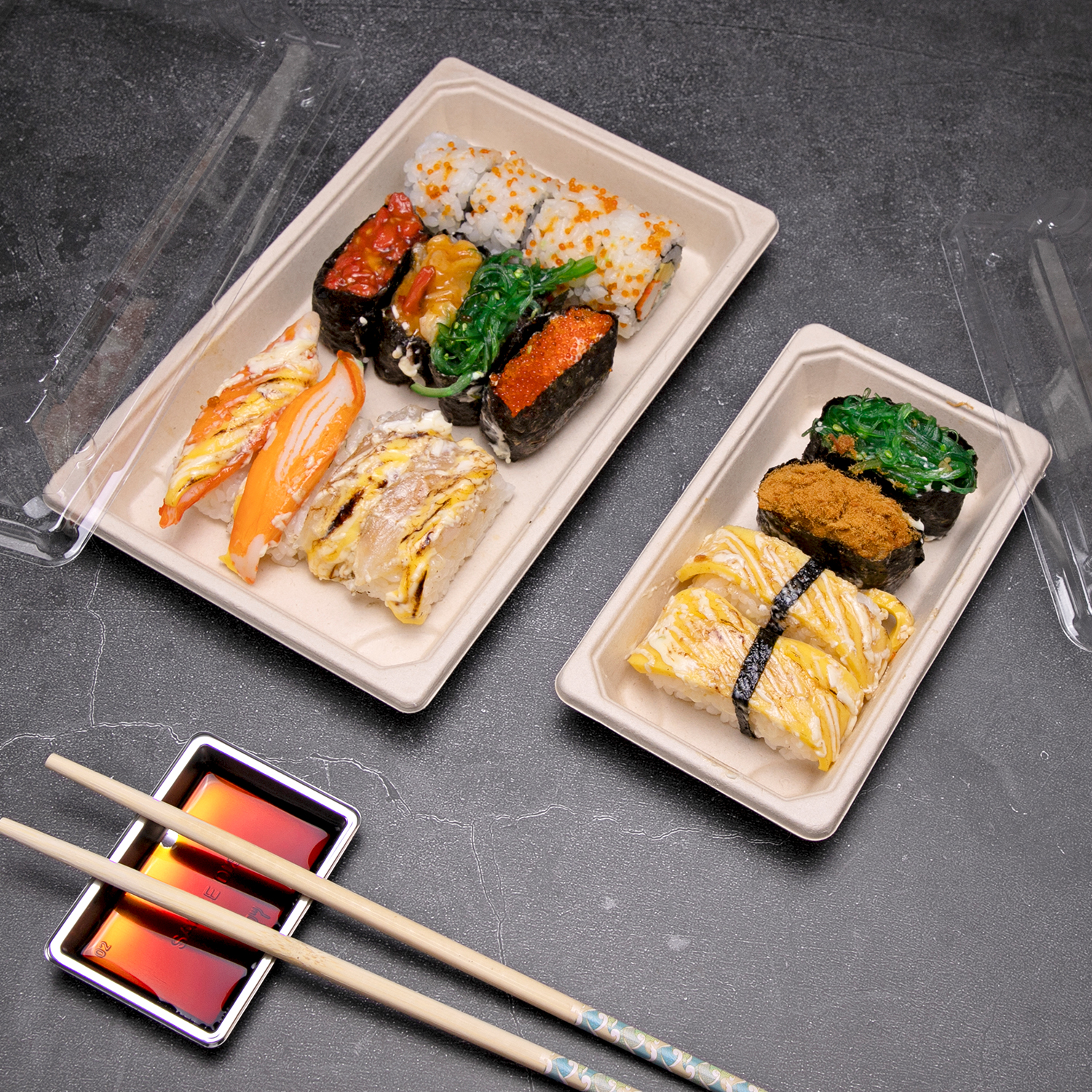
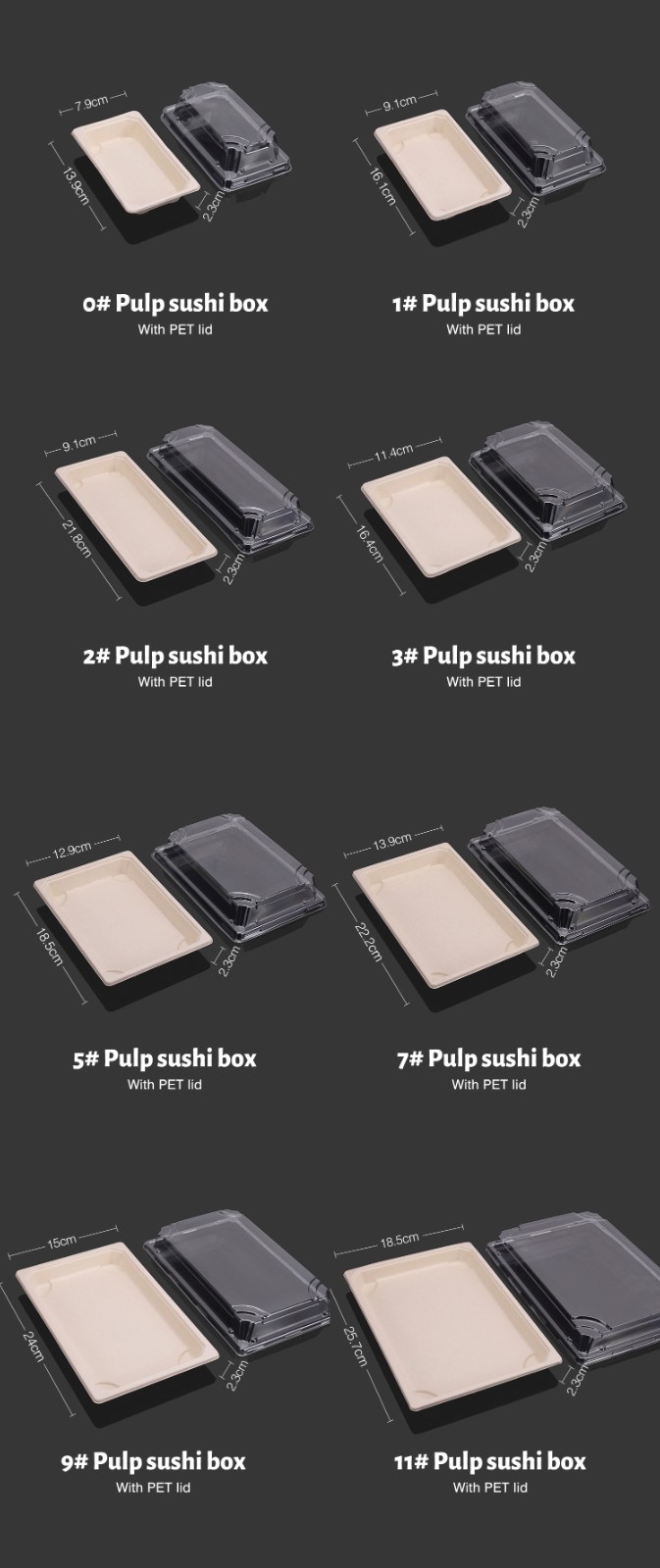
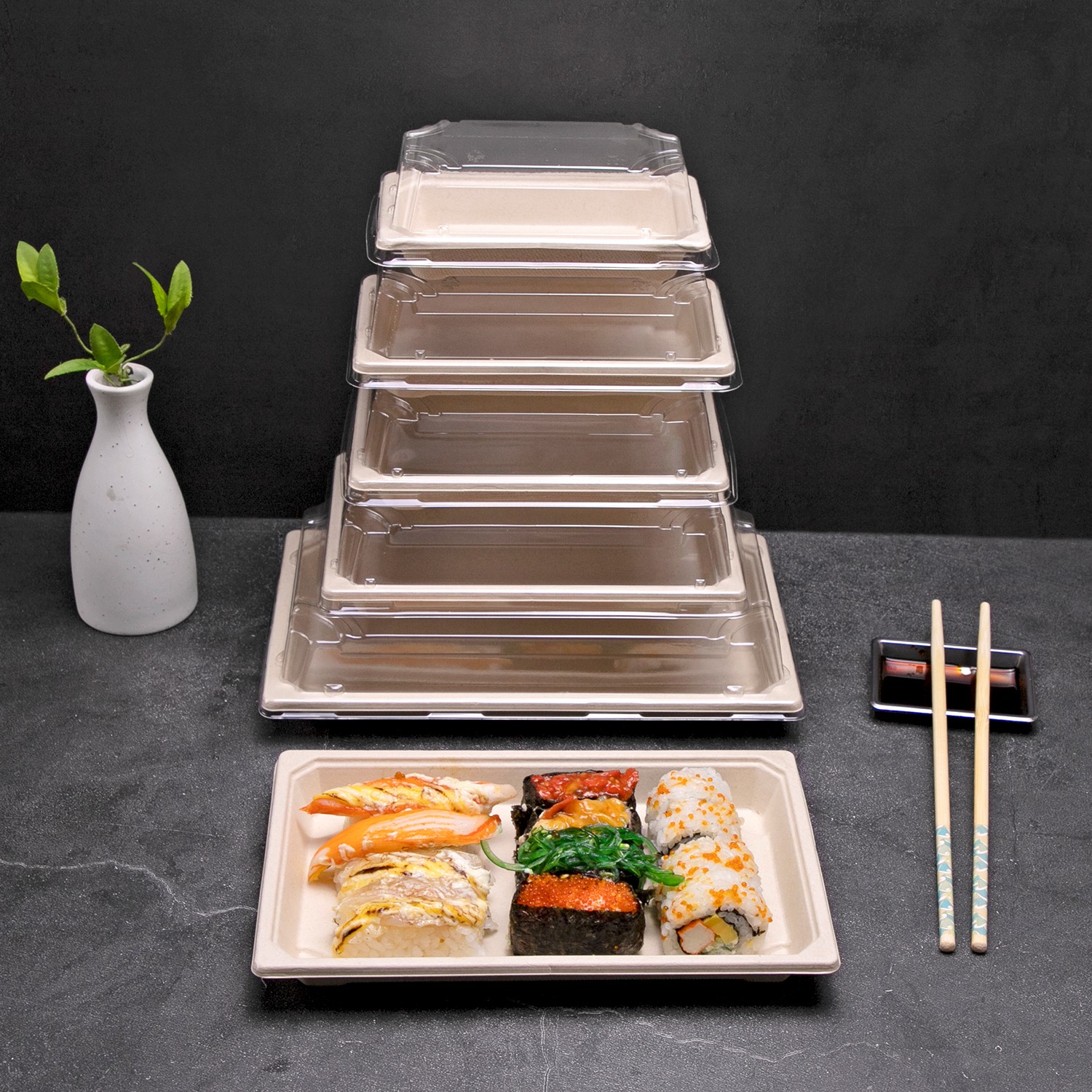
The outer shell of the dining box is rectangular (which matches sushi placement habits) and comes in a variety of sizes (usually 6-12 sheets of sushi in size). The container has a shallow base and a large opening to make it easy to get the food items while at the same time preserving the attractive look of the sushi.
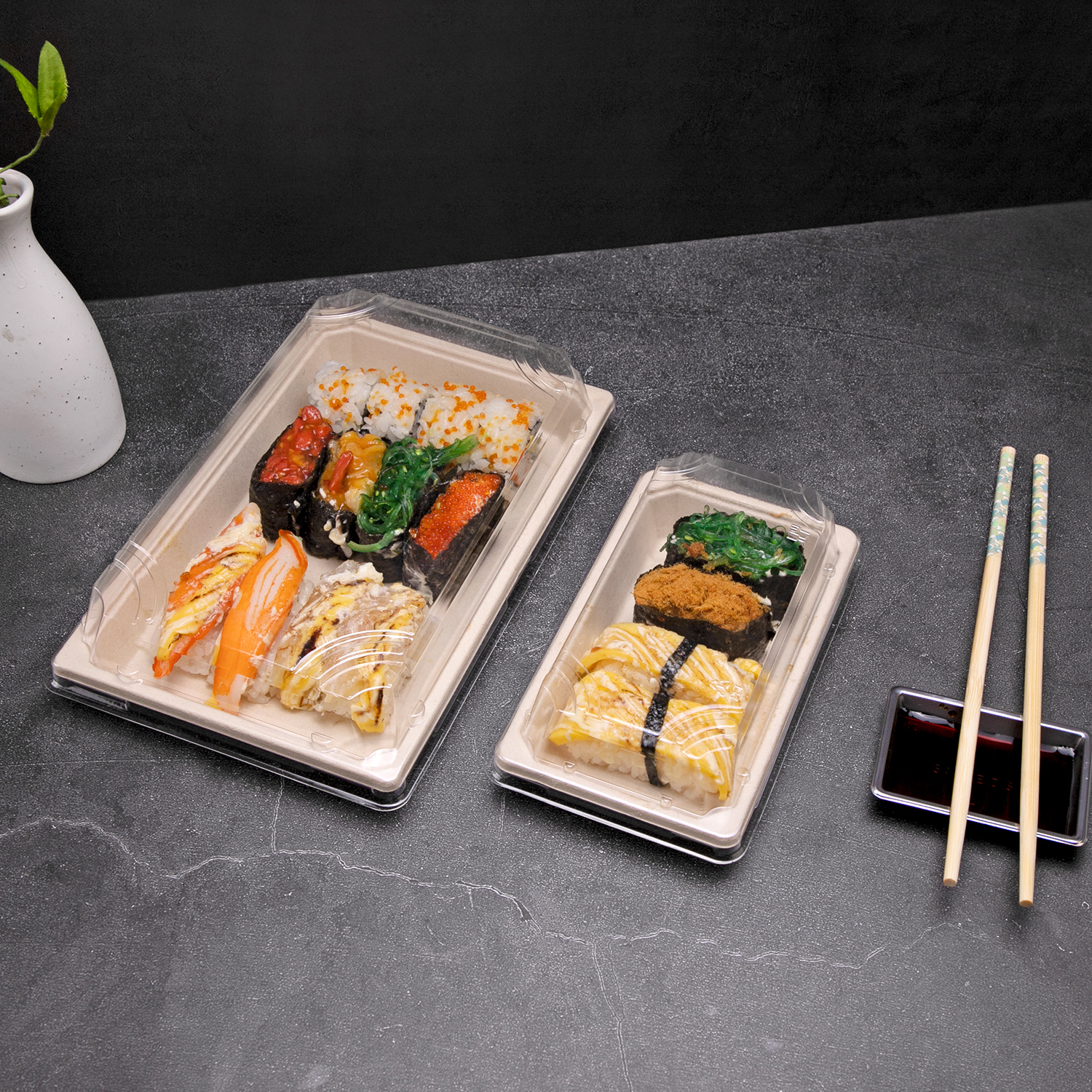
In combination with a clear PET plastic lid, the visual design makes the color and arrangement of sushi visible at a glance, thereby stimulating appetite; The lid edge is designed with a "card slot" which couples with the box tightly, thereby preventing contents from spilling and the sushi from getting oxidized to a great extent (cutting down sushi's contact with the air, thus slowing down spoilage).
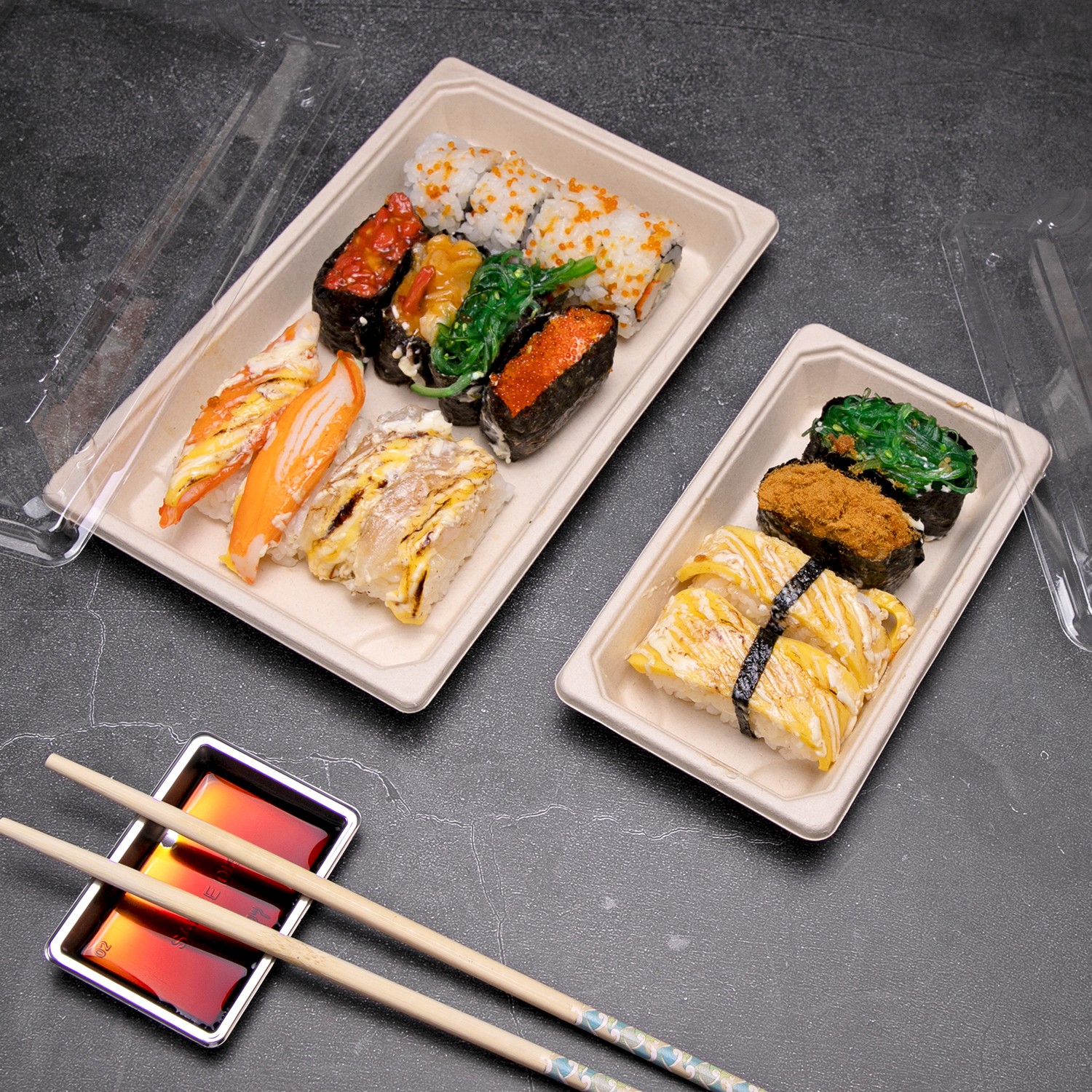
It is appropriate packaging for various sushi types like nigiri, maki, gunkan, etc. Besides, it can contain sashimi, Rice and vegetable roll, Japanese side dishes (such as pickled radish, seaweed), and even a light salad. Also, its exquisite look raises the brand image, and the environmental friendliness feature coincides with the Japanese "natural, simple" food culture.
Coming along with the familiar and comfortable sushi pack modus, such a product naturally meets the daily basic needs for food packaging. At the same time, ecological protection is being done. So, indeed, it is a very good choice for Japanese cuisine takeaway packaging.
About UsWe are a single point of contact manufacturer and supplier for all your needs of disposable food service packaging. Our main focus is on fiber packaging and food service packaging. Our range of services includes design, R&D, mass production, and sales. This gives a customer the utmost convenience of dealing with us only. Also, by no means sacrificing the strength and appearance, we always strive for sustainability. Our fiber products like trays and containers, besides being biodegradable, can also hold the food at a hot or cold temperature. For the rest of the food service requirements, we provide a variety of adaptable options that are not only safe but also user-friendly.
With our ultra-modern production lines plus thorough quality inspections, we pledge that every order conforms exactly to your requirements. Come and experience the easiest way of shifting to eco-friendly packaging with our support.
FAQQ: Are paper bowls biodegradable?A: Paper bowls without a PE coating or with a PLA coating can be completely biodegraded within 3–6 months under industrial composting conditions; there are also products suitable for home composting.
Q: Can paper bowls be recycled?A: Clean, dry paper bowls can be recycled as paper. However, those with food residues or grease stains are best composted. We advocate ‘wash first, then recycle’.
Q: How does the carbon footprint of paper bowls compare to that of plastic bowls?A: Paper bowls are made from renewable plant fibres, and their production requires significantly less energy and generates far lower carbon emissions than traditional plastic bowls, particularly when agricultural waste such as sugarcane bagasse is used.
Q: Are paper bowls made from timber sourced from primary forests?A: We prioritise the use of FSC (Forest Stewardship Council)-certified wood pulp or non-wood fibres (such as bamboo pulp and sugarcane bagasse) to protect primary forests.
Q: Are the degradation products of paper bowls toxic?A: They are completely non-toxic. Upon degradation, they primarily break down into water, carbon dioxide and organic biomass, causing no pollution to soil or water bodies.